
12 Unique Business Ideas for Aspiring Entrepreneurs

Finding a business idea is easy. Finding one that matches changing customer behaviour, new technology and a genuine market problem is much harder.
In 2026, some of the strongest opportunities for aspiring UK entrepreneurs are developing around artificial intelligence, digital skills, energy efficiency, personalised services, sustainability and convenience.
AI adoption provides a clear example of how quickly the market is changing. In June 2026, 29% of UK businesses reported using at least one form of artificial intelligence, up from 21% a year earlier. Text generation and visual-content creation were among the most widely adopted AI applications.
The opportunities are not limited to technology businesses either. Entrepreneurs can still build viable service, retail and home-based businesses by solving specific problems better than established competitors.
Those looking for lower-overhead alternatives can also consider practical small business ideas from home before committing to premises or expensive equipment.
What Makes a Business Idea Unique in 2026?
A unique business idea does not necessarily mean creating something that has never existed before.
In 2026, many strong opportunities come from improving an existing product or service through technology, personalisation, convenience or a more specialised customer focus.
A promising business idea should ideally have:
- A Clear Customer Problem: Solve something customers genuinely want fixed
- A Defined Target Market: Focus on a specific type of customer rather than everyone
- A Strong Differentiator: Compete through better service, technology, pricing, convenience or specialisation
- Potential for Repeat Revenue: Subscriptions, maintenance, retainers or repeat purchases can improve stability
- Room to Scale: Look for ways to grow without costs increasing at exactly the same rate as revenue
- Current Market Relevance: Consider developments such as AI adoption, sustainability, digital services and changing consumer behaviour
The strongest 12 unique business ideas in this list combine established customer demand with opportunities created by changing technology and lifestyles.
Which Unique Business Ideas Have the Best Potential in the UK?
The best opportunity depends on your skills, available capital and whether you want to operate online, locally or through a scalable digital model.
| Business Type | Best For | Typical Startup Cost | Growth Potential |
| AI Automation Services | Tech-Savvy Entrepreneurs | Low | High |
| Online Skills Training | Industry Experts | Low | High |
| No-Code App Development | Digital Entrepreneurs | Low | High |
| Mobile Car Detailing | Local Service Businesses | Medium | Medium |
| Smart Home Services | Practical And Technical Founders | Medium | Medium |
| Personalised Subscription Boxes | Product-Based Entrepreneurs | Medium | High |
| Virtual Interior Design | Designers And Creatives | Low | High |
| Circular Product Businesses | Sustainability-Focused Founders | Low To Medium | Medium |
For entrepreneurs with limited capital, AI services, consulting, online training and no-code development can be easier to test because they require relatively little stock or physical infrastructure.
Those who prefer a local service business may find opportunities in mobile detailing, smart-home installation or hyperlocal delivery, while entrepreneurs interested in physical products could explore personalised subscriptions, pet technology or circular-economy products.
The key is to choose an idea that matches your existing strengths while solving a problem customers are already willing to pay for.
Top 12 Unique Business Ideas
1. AI-Powered Virtual Assistants and Workflow Automation

AI-powered virtual assistance has moved well beyond simple website chatbots.
Businesses now use AI to draft documents, organise information, analyse data, manage customer enquiries and connect different software systems. However, many smaller businesses still lack the technical knowledge or time to build reliable automated workflows.
That creates an opportunity for entrepreneurs who can design AI-assisted systems around specific business problems.
UK government research published in 2026 found that AI adoption is established but still uneven, particularly when it comes to integration with existing business systems.
Why It Could Work in 2026:
- Growing AI Adoption: More businesses are experimenting with AI but need help moving from basic tools to useful workflows
- Recurring Revenue Potential: Businesses may pay monthly for maintenance, monitoring and improvements
- Low Physical Overheads: The service can usually operate remotely
- Specialisation Opportunities: Providers can focus on accountants, estate agents, recruiters, retailers or other sectors
How to Start:
- Choose one type of customer rather than targeting every industry
- Learn automation platforms alongside AI tools and common business software
- Build demonstration workflows around tasks such as lead qualification, appointment booking or document processing
- Offer an initial workflow audit before recommending automation
- Include human review and appropriate data controls in sensitive processes
Understanding how companies are already using AI to improve business operations can also help identify repetitive tasks that businesses may be willing to outsource or automate.
Target Audience:
- Small and medium-sized businesses
- Professional service firms
- E-commerce businesses
- Agencies
- Entrepreneurs and freelancers
2. Personalised Subscription Boxes
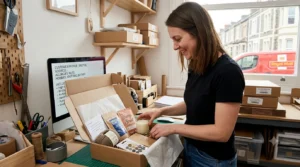
Subscription boxes are no longer unusual by themselves, so simply putting products into a monthly package is unlikely to create a strong competitive advantage.
The opportunity in 2026 is greater personalisation.
Entrepreneurs could create subscriptions based on customer preferences, allergies, hobbies, lifestyle choices, pets, professional interests or previous purchases.
Examples include speciality food boxes, hobby kits, independent beauty products, stationery, craft supplies and personalised pet boxes.
Why It Could Work in 2026:
- Predictable Revenue: Repeat subscriptions can create more dependable sales than one-off purchases
- Strong Niche Potential: Businesses can serve relatively small but highly engaged audiences
- Cross-Selling Opportunities: Successful boxes can lead to standalone product sales
- Customer Data: Preference information can help improve future selections
How to Start:
- Pick a clearly defined niche
- Test customer interest before purchasing large quantities of stock
- Find dependable suppliers with manageable minimum order quantities
- Create several subscription tiers
- Give customers an easy way to update preferences or skip deliveries
- Calculate packaging, postage, returns and payment-processing costs carefully
Entrepreneurs producing handmade products could also test individual products through marketplaces before developing a subscription model. Selling through platforms such as Etsy can help reveal which items receive genuine customer demand.
Target Audience:
- Hobby enthusiasts
- Pet owners
- Food and drink enthusiasts
- Wellness consumers
- Gift buyers
- Customers seeking independent brands
3. Digital Wellbeing and Responsible Technology Consultancy
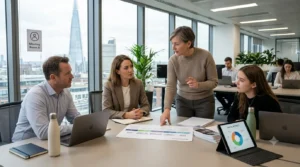
Digital wellbeing has changed considerably since the original concept of simply encouraging people to spend less time online.
In 2026, organisations must also consider notification overload, remote-working boundaries, AI dependence, digital distraction and how new technology affects working practices.
A digital wellbeing consultant can help businesses develop healthier and more productive approaches to technology.
Why It Could Work in 2026:
- Workplace Relevance: Digital tools are embedded in most modern jobs
- B2B Opportunities: Employers can purchase workshops or consulting programmes
- Flexible Delivery: Services can be delivered through workshops, online courses and one-to-one consultations
- AI Creates New Questions: Organisations increasingly need practical policies around when and how employees should use AI
How to Start:
- Develop expertise in workplace wellbeing, behavioural change or organisational training
- Choose whether to work with individuals, employers or both
- Build workshops around specific problems rather than vague digital detox programmes
- Create measurable outcomes such as communication practices, focus time or reduced unnecessary notifications
- Avoid presenting wellbeing coaching as medical or psychological treatment unless appropriately qualified
Target Audience:
- Employers
- Remote and hybrid teams
- Professional service businesses
- Parents and families
- Self-employed professionals
4. Smart Home and Energy Optimisation Services
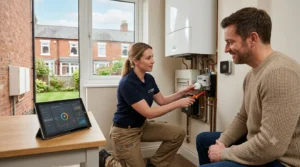
Smart-home installation can become more valuable when positioned around practical outcomes rather than novelty gadgets.
Customers may want smart thermostats, security devices, energy monitoring, lighting controls, connected doorbells and other systems installed correctly and integrated into one manageable setup.
Energy costs remain a concern for UK businesses and households, making energy-monitoring and efficiency services particularly relevant.
Why It Could Work in 2026:
- Multiple Services: Installation, configuration, troubleshooting and upgrades can all generate revenue
- Energy Efficiency: Customers increasingly want technology that can help monitor or reduce consumption
- Repeat Work: Smart-home systems expand as customers add new devices
- Property Partnerships: Installers can work with landlords, developers and property managers
How to Start:
- Train on widely used smart-home ecosystems
- Understand Wi-Fi, networking and basic cybersecurity
- Develop fixed-price packages for common installations
- Partner with appropriately qualified electricians where regulated electrical work is involved
- Provide customers with clear privacy and security guidance
Target Audience:
- Homeowners
- Landlords
- Property developers
- Small offices
- Holiday-let operators
- Older customers wanting easier home controls
5. Virtual Reality and Immersive Event Experiences
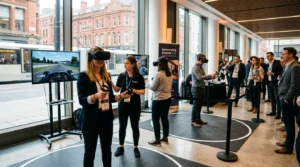
VR events can offer something that conventional entertainment cannot easily replicate.
Instead of trying to create an expensive VR technology company, a smaller business can provide portable immersive experiences for events.
Potential services include virtual escape rooms, racing simulations, educational demonstrations, branded product experiences, property demonstrations and corporate team-building activities.
Why It Could Work in 2026:
- Experience-Led Business: Customers pay for the event rather than purchasing the hardware
- B2B Opportunities: Companies frequently require new formats for exhibitions and corporate events
- Reusable Equipment: The same hardware can support multiple bookings
- Premium Packages: Businesses can charge more for custom branded experiences
How to Start:
- Begin with a small number of reliable headsets
- Select experiences that work well in portable environments
- Develop clear health, hygiene and equipment-safety procedures
- Create corporate, educational and private-event packages
- Partner with event organisers and venues
Target Audience:
- Corporate event organisers
- Exhibition organisers
- Schools and training providers
- Wedding and party planners
- Marketing agencies
6. Sustainable and Circular Product Businesses
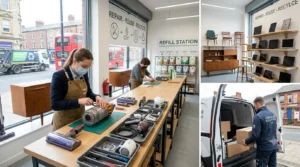
Sustainability businesses in 2026 should go beyond attaching an environmental label to ordinary products.
A stronger opportunity is building around the circular economy, where products and materials remain useful for longer through repair, reuse, refurbishment and recycling.
Government circular-economy guidance published in 2026 specifically highlights keeping resources in use for longer through durable, repairable, reusable and recyclable products.
Possible business models include refurbished furniture, repaired electronics, reusable packaging, upcycled materials, refill products and repair services.
Why It Could Work in 2026:
- Multiple Revenue Models: Businesses can sell products, repairs and refurbishment services
- Lower Material Waste: Reusing existing products can reduce dependence on new materials
- Local Opportunities: Repair and refurbishment businesses can operate within specific communities
- B2B Demand: Other businesses may need support reducing waste or reusing equipment
How to Start:
- Choose one product category where repair or reuse creates obvious value
- Establish reliable sourcing channels
- Calculate labour costs as carefully as material costs
- Avoid environmental claims that cannot be substantiated
- Consider take-back or trade-in schemes to secure future inventory
Target Audience:
- Environmentally conscious consumers
- Landlords
- Small businesses
- Students
- Price-conscious households
- Independent retailers
7. Online Courses and AI-Era Skills Training

Online course creation remains accessible, but generic recorded courses face much more competition than they did several years ago.
The stronger opportunity is specialised training linked to skills people currently need.
England’s Essential Digital Skills Standards were updated in July 2026 to reflect technological change, including artificial intelligence.
Entrepreneurs with genuine expertise could create training around AI literacy, spreadsheets, cybersecurity awareness, digital marketing, software platforms, professional qualifications or industry-specific processes.
Why It Could Work in 2026:
- Low Delivery Costs: Digital courses can serve many learners
- B2B Training: Employers may purchase courses for entire teams
- Multiple Formats: Revenue can come from recorded courses, live workshops and coaching
- Rapidly Changing Skills: New technology creates continuing training requirements
How to Start:
- Choose a narrow learning outcome
- Validate demand before recording a large course
- Combine video with worksheets, assessments and practical exercises
- Offer live workshops initially to understand common learner problems
- Update material regularly, particularly for technology subjects
Target Audience:
- Small businesses
- Professionals looking to upskill
- Freelancers
- Career changers
- Employers training staff
8. Mobile Car Wash and Eco Detailing Services
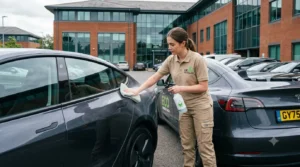
Mobile car detailing remains attractive because it combines convenience with a relatively simple local service model.
The opportunity becomes more distinctive when the business specialises. That might mean water-efficient cleaning, fleet contracts, premium detailing, interior restoration, lease-return preparation or mobile services for workplaces.
Why It Could Work in 2026:
- Convenience: Customers do not need to travel to a fixed car wash
- Repeat Purchases: Vehicle cleaning creates natural recurring demand
- Local Scalability: One operator can eventually expand into multiple mobile teams
- B2B Potential: Fleets can provide larger repeat contracts
How to Start:
- Check local rules surrounding water use and wastewater disposal
- Purchase professional equipment rather than overinvesting in a large vehicle immediately
- Develop simple service packages
- Introduce online booking and automated reminders
- Approach taxi operators, dealerships, offices and small fleets
Target Audience:
- Busy professionals
- Company fleets
- Taxi and private-hire drivers
- Dealerships
- Premium vehicle owners
9. Pet Tech and Smart Pet Care Services
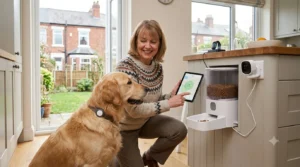
The scale of UK pet ownership makes this a market worth examining.
UK Pet Food’s 2026 research estimates that 62% of UK households own a pet, representing approximately 36.5 million pets, including around 15.5 million dogs and 13 million cats.
Instead of simply reselling generic pet gadgets, entrepreneurs could provide specialist services around choosing, installing and supporting pet technology.
Examples include GPS trackers, automatic feeders, pet cameras, activity trackers and connected home devices.
Why It Could Work in 2026:
- Large Customer Base: Pet ownership remains widespread
- Service Plus Product Revenue: Businesses can combine equipment sales with setup or subscriptions
- Premium Spending Opportunities: Some owners are willing to spend more on convenience and monitoring
- Partnership Potential: Veterinary practices, groomers and pet retailers can become referral sources
How to Start:
- Test products before recommending them
- Focus on one type of pet or customer problem
- Build clear setup and support packages
- Partner with trusted suppliers
- Avoid making veterinary or health claims unless appropriately supported
Target Audience:
- Dog and cat owners
- Busy professionals
- Multi-pet households
- Pet sitters
- Independent pet retailers
10. Hyperlocal Delivery and Returns Services
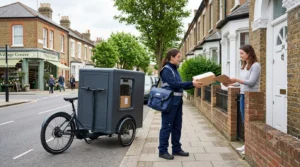
Competing directly with nationwide food-delivery platforms can be expensive.
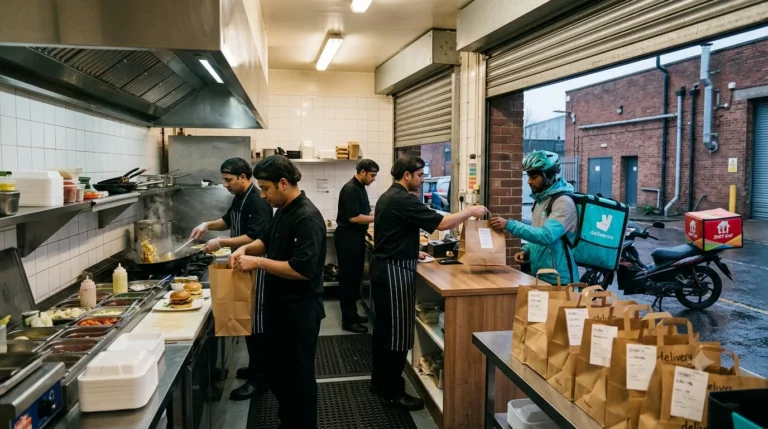
A more realistic business model is to specialise in deliveries that large platforms do not handle particularly well.
That could include same-day business documents, local retailer deliveries, customer returns, independent pharmacy deliveries where regulations allow, florist deliveries or scheduled B2B collections.
Why It Could Work in 2026:
- Clear Local Problem: Smaller retailers often need flexible logistics without operating their own fleet
- B2B Contracts: Regular business customers can provide more predictable revenue
- Specialisation: Fragile, urgent or scheduled deliveries can command higher prices
- Low Initial Geography: The business can start in one small area before expanding
How to Start:
- Select one town, borough or tightly defined service area
- Speak to local businesses before purchasing vehicles
- Build simple booking and tracking processes
- Calculate insurance and vehicle costs carefully
- Create monthly packages for repeat business clients
Target Audience:
- Independent retailers
- Florists
- Professional service firms
- Local e-commerce sellers
- Restaurants and food businesses
- Small wholesalers
11. Virtual Interior Design and AI-Assisted Space Planning
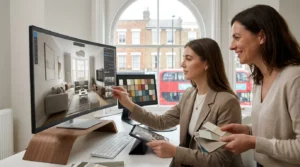
Virtual interior design has developed beyond video consultations and static mood boards.
Designers can now use 3D visualisation and AI-assisted tools to explore layouts, colour combinations and furniture options much more quickly.
A virtual design business can offer lower-cost support to customers who do not need a traditional full-service interior designer.
Why It Could Work in 2026:
- Remote Delivery: Designers can work with customers across the UK
- Lower Overheads: A physical design studio is not essential
- Tiered Pricing: Customers can choose advice-only, room plans or complete packages
- Property Market: Landlords and short-term accommodation operators may need repeat design work
How to Start:
- Build a strong portfolio
- Learn professional design and visualisation software
- Offer clearly priced room packages
- Develop relationships with furniture and homeware suppliers
- Make clear which visualisations are concepts rather than guaranteed representations of completed work
Target Audience:
- Homeowners
- Renters
- Landlords
- Property developers
- Holiday-let owners
- Small offices
12. Low-Code, No-Code and AI App Development

Low-code and no-code development remains relevant in 2026, but the opportunity has expanded considerably through AI.
Entrepreneurs can now build internal dashboards, customer portals, booking systems, workflow tools and early-stage MVPs without developing every component from scratch.
The real business opportunity is not selling “no-code”. Customers generally care about solving a problem quickly and affordably.
Why It Could Work in 2026:
- Growing Digital Adoption: Smaller businesses continue to digitise processes
- Faster Development: Low-code systems can reduce development time for suitable projects
- Recurring Income: Hosting, maintenance and improvements can provide ongoing revenue
- MVP Demand: Startups can test ideas before committing to expensive custom development
How to Start:
- Master two or three platforms instead of trying to learn every available tool
- Target one type of application or industry
- Build several demonstration projects
- Charge for discovery and planning as well as development
- Consider security, backups, data portability and platform dependency before recommending a solution
Target Audience:
- Startups building MVPs
- Small businesses replacing spreadsheets
- Professional service firms
- Local businesses needing booking systems
- Companies automating internal processes
Which Business Ideas Have the Strongest 2026 Opportunity?
There is no universally “best” business, but the 12 ideas can be grouped according to the type of opportunity they offer.
| Business Idea | Startup Cost Level | Main Revenue Model | Scalability |
| AI Workflow Automation | Low | Project + Monthly Support | High |
| Personalised Subscription Boxes | Medium | Subscription | High |
| Digital Wellbeing Consultancy | Low | Consulting + Training | Medium |
| Smart Home Services | Medium | Installation + Support | Medium |
| VR Event Experiences | Medium To High | Event Fees | Medium |
| Circular Product Business | Low To Medium | Products + Services | Medium |
| Online Skills Training | Low | Courses + Workshops | High |
| Mobile Car Detailing | Medium | Service Fees + Contracts | Medium |
| Pet Tech Services | Low To Medium | Product + Service | Medium |
| Hyperlocal Delivery | Medium | Delivery Fees + Contracts | Medium |
| Virtual Interior Design | Low | Design Packages | High |
| No-Code App Development | Low | Projects + Maintenance | High |
These are broad classifications rather than guaranteed startup costs or income levels. Equipment, insurance, software, staff and regulatory requirements can change the economics significantly.
How to Choose the Right Business Idea?
A unique idea alone does not create a successful company. A relatively ordinary service solving a genuine customer problem can be stronger than a highly original concept with no proven demand.
Match the Business to Your Skills
Consider what you can already do well.
Technical founders may be suited to AI automation or app development, while people with practical skills may prefer smart-home installations, vehicle detailing or refurbishment.
Skills can be developed, but building around existing experience often reduces the time and money required before the business can start trading.
Validate Market Demand
Before investing heavily:
- Speak directly to potential customers
- Search for existing competitors
- Review customer complaints and reviews
- Test pricing
- Create a simple landing page
- Run a small pilot
- Try to secure your first paying customer
A structured competitor analysis can reveal where established businesses are performing well and where customers remain underserved.
Understand the Revenue Model
Ask how customers will actually pay you.
Possible models include:
- One-Off Projects
- Hourly Fees
- Monthly Retainers
- Product Sales
- Subscriptions
- Maintenance Plans
- Training Fees
- Licensing
- Commission
Recurring income is attractive, but it should emerge naturally from the service rather than being forced onto customers.
Calculate the Real Startup Cost
Do not consider equipment alone.
Include:
- Insurance
- Software
- Stock
- Website Costs
- Advertising
- Professional Fees
- Transport
- Packaging
- Payment Processing
- Tax
- Staff Costs
- Contingency Funds
Businesses that can be tested cheaply before major investment usually give aspiring entrepreneurs more room to adapt.
What Should You Know Before Starting a UK Business in 2026?
Choosing the idea is only one part of starting a business.
Your responsibilities depend on whether you operate as a sole trader, limited company, partnership or another structure. GOV.UK confirms that the structure chosen affects taxation and legal responsibilities.
Sole traders generally need to register for Self Assessment when relevant trading income exceeds £1,000 in a tax year, while limited companies must be incorporated before trading through that company.
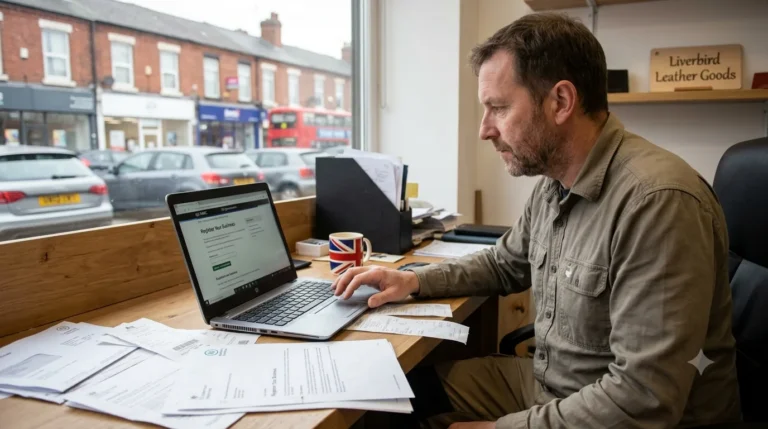
A practical explanation of when you need to register a business with HMRC can help founders distinguish tax registration from company incorporation.
There is also an important Companies House change affecting company founders in 2026. Identity verification became a legal requirement from 18 November 2025.
New directors must verify their identity when incorporating or being appointed, while existing directors and people with significant control are being brought into the system during the transition period.
Other areas to consider include:
- Business Insurance
- Licences and Local Council Requirements
- Consumer Protection
- Employment Law
- Health and Safety
- Data Protection
- VAT
- Intellectual Property
- Accounting and Record Keeping
The insurance required depends heavily on what the business actually does, so founders should assess business insurance for a startup rather than assuming one generic policy covers every risk.
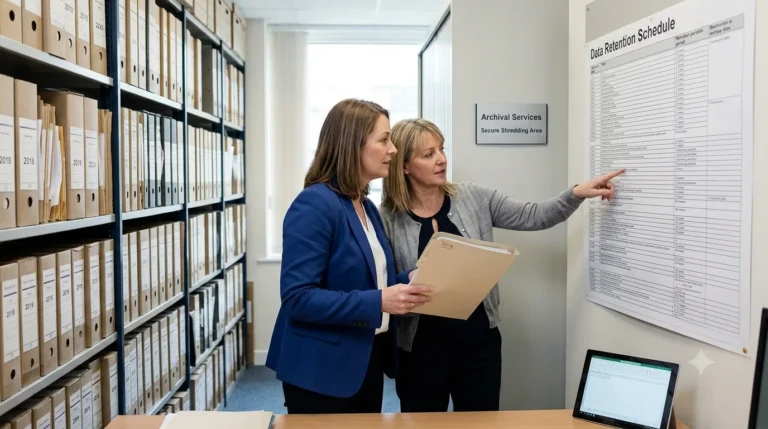
Businesses handling personal information should also establish appropriate security, retention and deletion processes. There is no universal GDPR rule allowing organisations to retain all personal data for a fixed number of years, making a suitable data retention policy particularly important for businesses using customer databases or AI systems.
What Are the Main Risks of Starting a Business?
Every startup involves uncertainty.
Financial Risk
Cash flow can become a bigger problem than profitability, particularly where customers pay invoices late but the business has immediate expenses.
Keep fixed costs low during the validation stage and avoid assuming sales will immediately reach their target level.
Weak Market Demand
Founders sometimes build what they personally like rather than what customers are prepared to buy.
Testing a simplified version first can prevent months of unnecessary development.
Overdependence on Technology Platforms
Businesses built entirely around one marketplace, social network or software provider can be vulnerable to pricing or policy changes.
Where possible, build your own customer database, website and direct relationships alongside third-party platforms.
Data and Cybersecurity Risk
Cybersecurity is increasingly relevant even for very small businesses. Updated National Cyber Security Centre guidance warns that small organisations remain exposed to online crime and recommends measures including stronger account security, backups and staff awareness.
Scaling Too Quickly
Hiring employees, leasing premises and purchasing stock before demand has been proven can turn a promising idea into an expensive business.
Build capacity as repeatable customer demand appears.
What Marketing Strategies Work for New Businesses in 2026?
A new company does not need to appear on every platform.
Choose marketing channels according to how your customers actually find businesses.
Build Search Visibility
Create a fast, useful website focused on customer problems rather than simply describing the company.
For local businesses, maintain an accurate Google Business Profile with contact information, opening hours, services, photographs and customer reviews.
Create Useful Content
Content works best when it answers questions customers already have.
Examples include:
- Buying Guides
- Demonstrations
- Before-And-After Examples
- Tutorials
- Customer Case Studies
- FAQs
- Short Educational Videos
Use Social Media Selectively
A B2B automation consultant may gain more value from LinkedIn than TikTok, while a subscription-box company may benefit more from Instagram, TikTok or Pinterest.
Concentrating on one or two relevant channels is generally more manageable for a small team.
Build Email and First-Party Audiences
Social-media followers belong to the platform.
An opted-in email list creates a more direct relationship with potential customers and can support repeat purchases, product launches and customer retention.
Create Partnerships
Partnerships can be particularly effective for local and niche businesses.
A pet-tech company could work with groomers. An interior designer could work with letting agents. A mobile detailer could partner with dealerships. A smart-home installer could develop relationships with property professionals.
What Tools Can Help a New Business?
Technology should simplify the business rather than create a complicated collection of subscriptions.
| Area | Examples | Main Purpose |
| Accounting | Xero, QuickBooks, FreeAgent | Bookkeeping, Invoicing and Financial Records |
| Website | WordPress, Shopify, Squarespace, Wix | Website and E-Commerce |
| Analytics | Google Analytics 4, Search Console | Website Performance and Search Data |
| Design | Canva, Adobe Express | Marketing and Visual Content |
| Productivity | Notion, Trello, Asana | Projects and Tasks |
| Communication | Slack, Microsoft Teams, Google Workspace | Team Collaboration |
| CRM | HubSpot, Zoho CRM, Pipedrive | Leads and Customer Relationships |
| Automation | Zapier, Make | Workflow Automation |
| AI | ChatGPT, Microsoft Copilot, Gemini | Research, Drafting and Productivity |
Do not choose accounting software purely because it is popular. Features, bank integrations, VAT requirements, payroll, invoicing and Making Tax Digital compatibility can all matter depending on the business. Comparing accounting software for small businesses before committing to a platform can help avoid an unnecessary migration later.
Conclusion
The strongest business opportunities in 2026 are not necessarily completely new inventions. They are often new ways of solving existing problems. AI is creating demand for implementation and training. Increasing digitisation makes cybersecurity and digital skills more important.
Growth in EV infrastructure creates opportunities around installation and related services. Widespread pet ownership supports specialised pet businesses, while circular-economy policies and consumer behaviour continue to create possibilities for repair, refurbishment and reuse.
For aspiring entrepreneurs considering these 12 unique business ideas, the best starting point is not a large investment. It is finding a clearly defined customer, identifying a genuine problem and testing whether someone will pay for the solution.
Once that has been proven, technology, marketing and funding can help turn a small experiment into a sustainable business.
Frequently Asked Questions
What Are the Best Unique Business Ideas in 2026?
AI workflow automation, digital skills training, cybersecurity services, circular businesses, pet technology services, smart-home optimisation and no-code development are among the areas benefiting from current UK trends.
Which Business Can I Start With Low Investment in the UK?
Consulting, online training, virtual interior design, AI automation and no-code development can potentially be started with relatively low overheads if you already have the necessary skills and equipment.
What Business Ideas Are Growing Because of AI?
AI automation services, employee AI training, AI-assisted app development, data-governance consulting and specialist productivity services are emerging opportunities as business adoption increases.
What Is a Good Unique Business Idea From Home?
Online courses, virtual consulting, no-code development, AI automation and personalised online retail can all operate primarily from home. The suitability depends on planning, insurance, storage and customer-visit requirements.
Do I Need to Register a Business Before I Start?
It depends on the business structure. A limited company must be incorporated before it trades as that company, while sole-trader registration requirements depend on circumstances including trading income.
How Do I Know Whether My Business Idea Will Make Money?
Test it before committing substantial capital. Speak to customers, analyse competitors, calculate margins and try to generate actual paid orders rather than relying only on surveys or social-media interest.
What Is the Most Important Step When Starting a Business in 2026?
Validate demand. A strong product, advanced technology or attractive brand cannot compensate for a business solving a problem that customers are unwilling to pay to fix.